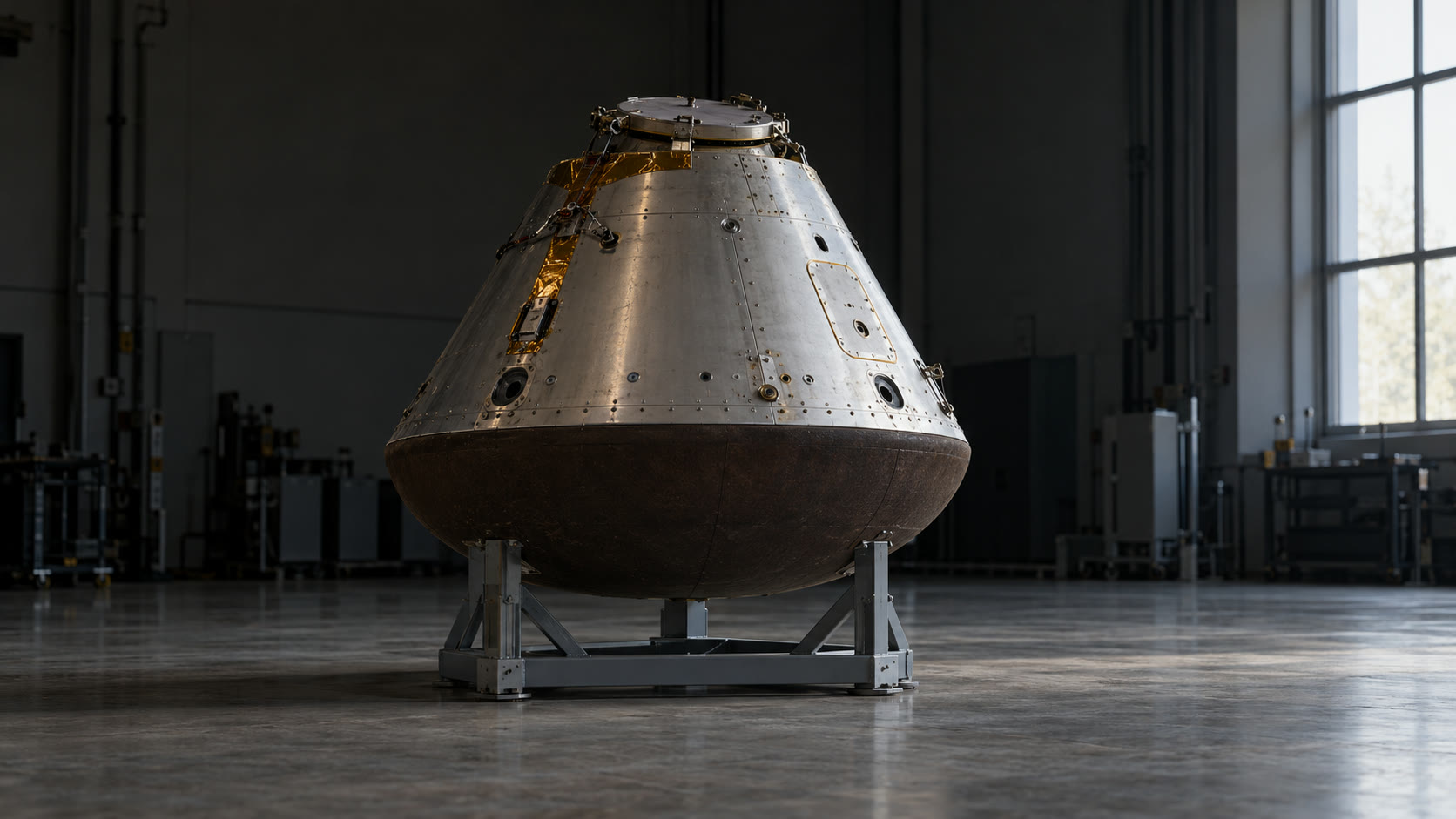
1.2 metres across. Built around one cassette.
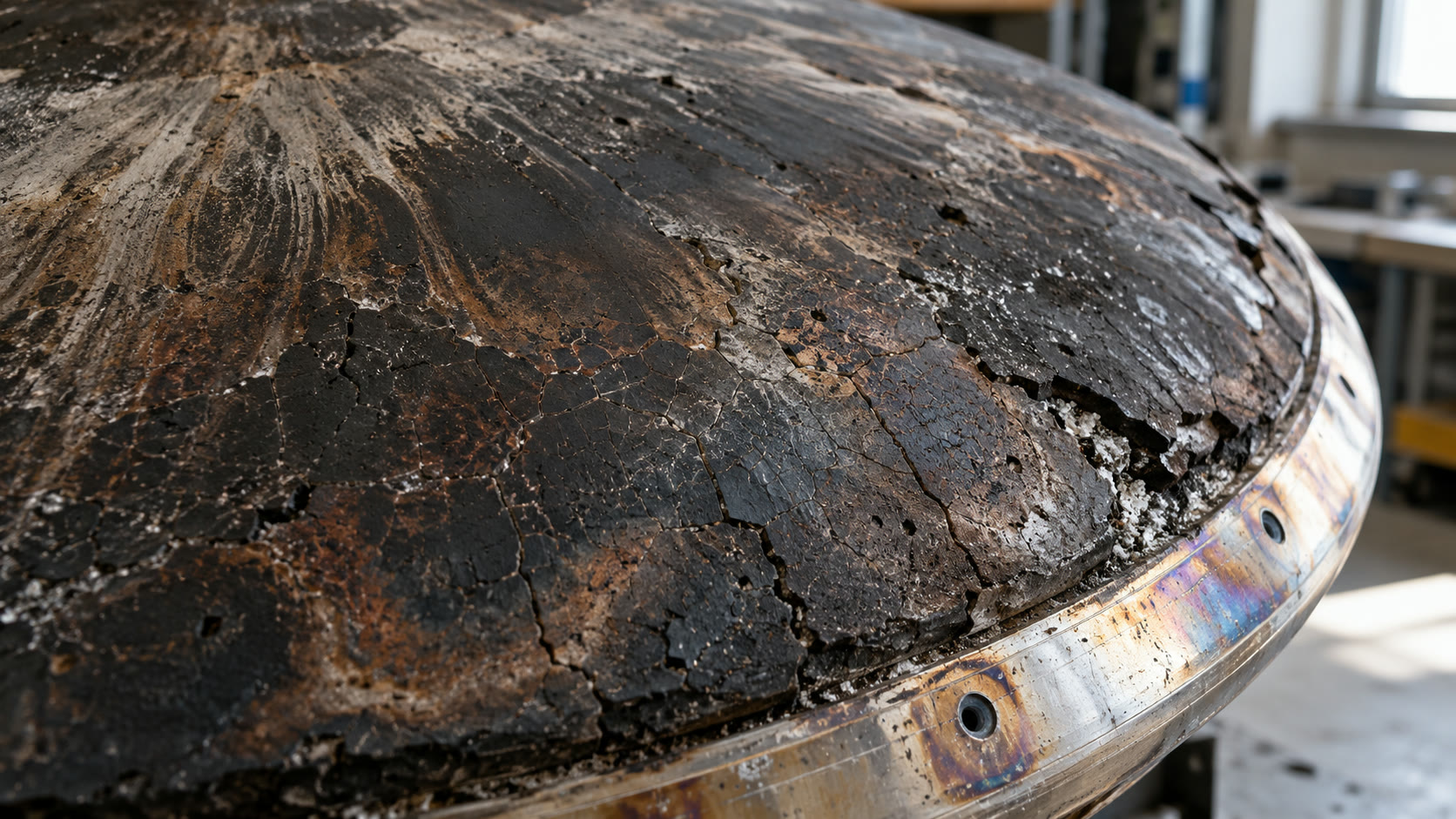
Everything on the capsule exists to keep 24 wells still, at 20.0 °C, for thirteen days, and to bring them through 1,650 °C without noticing.
Seven parts, from the shield up.
Scroll to take it apart.
- Heat shield: carbon ablator, 38 mm thick, rated to 1,800 °C, replaced every flight.
- Shoulder ring: titanium, carries the landing load.
- Avionics: flight computer, GPS, Iridium beacon, 1.1 kWh battery.
- Cassette: 24 wells of 2 ml behind sapphire windows, held at 20.0 ± 0.1 °C.
- Backshell: aluminium 2219 over cork, stays below 120 °C.
- Service hatch: where the cassette goes in and comes out.
- Parachutes: drogue at 9 km, main at 3 km.
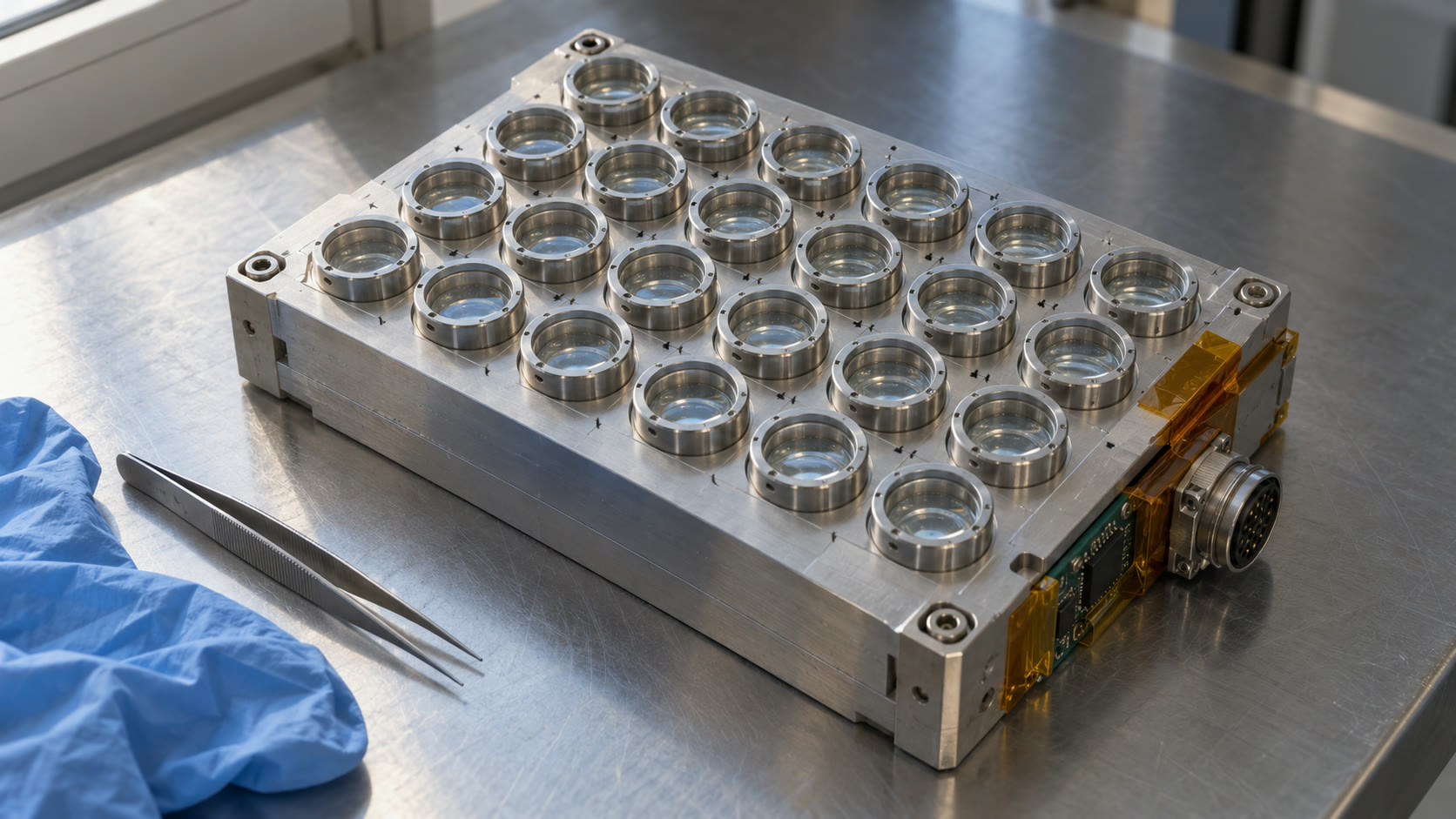
The cassette is the only part you touch.
You load it in our cleanroom, or we load it from your shipment at 2 to 8 °C. Each well has its own seal and window, so twenty-four formulations fly side by side and nothing passes between them.
Specification
| Diameter, height | 1.20 m, 0.86 m |
| Mass at launch | 168 kg, of which the cassette is 2.1 kg |
| Wells | 24 × 2 ml, sapphire windows, individually sealed |
| Well temperature | Set between 4 and 37 °C, held to ± 0.1 °C, logged every 10 s |
| Residual acceleration in orbit | Below 10 µg, quasi-steady |
| In orbit | Rides a host spacecraft for power and the de-orbit burn, separates 40 minutes before entry |
| Heat shield | Phenolic-impregnated carbon ablator, 38 mm, peak surface 1,650 °C on a 525 km return |
| Peak deceleration | 8.5 g, about 40 seconds |
| Parachutes | Drogue at 9 km, main at 3 km, touchdown at 7 m/s |
| Tracking | GPS and Iridium beacon from separation to recovery |
| Reuse | Backshell, avionics and cassette fly again; shield and parachutes are new each flight |